Causes of Burning Foot Pain

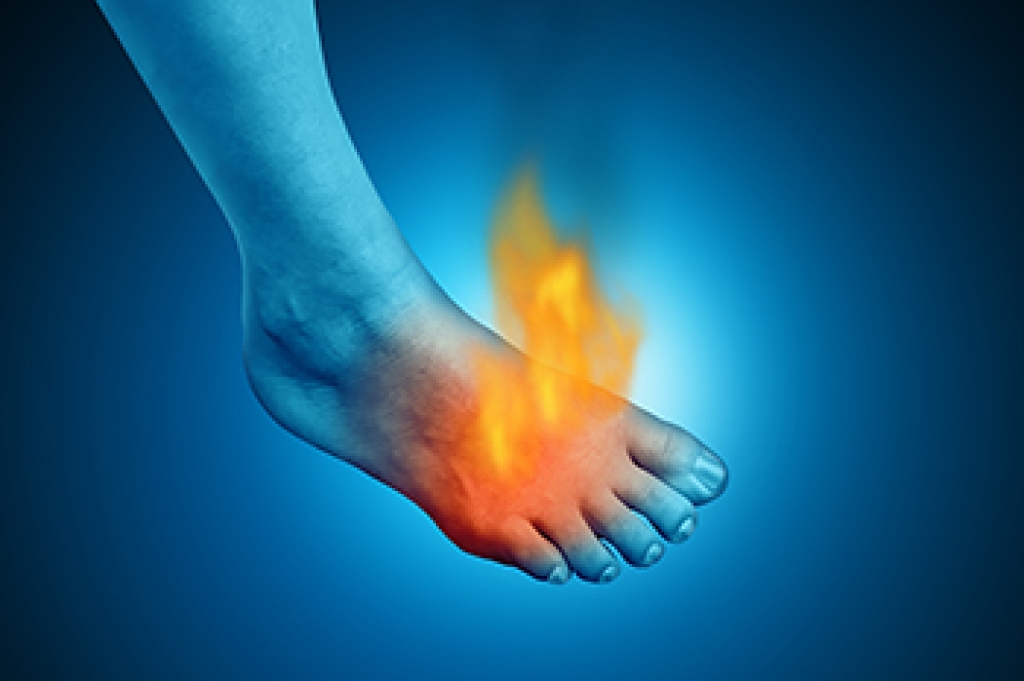
If your feet feel like they are burning up, it may be a sign that you have experienced nerve damage in the foot or leg, an injury, or a compression of the nerves. Burning feet, also known as Grierson-Gopalan Syndrome, is a condition that consists of damage to the small nerve fibers of the foot. Although the cause of this condition is not clear, it is often found in people who have diabetes, vitamin B deficiency, or rheumatoid arthritis. Among other possible causes of burning feet are peripheral artery disease, peripheral neuropathy, and Morton’s neuroma. Other factors that can result in burning foot syndrome include kidney or thyroid problems and abnormal biomechanics of the foot. Common symptoms of burning foot syndrome are a pain in the soles of the feet, a feeling of pins and needles, and numbness. If you regularly experience such symptoms, please contact a podiatrist for an exam and a diagnosis, followed by suggested treatment options.

Foot Pain

Foot pain can be extremely painful and debilitating. If you have a foot pain, consult with Steven Black, DPM from California . Our doctor will assess your condition and provide you with quality foot and ankle treatment.

Causes

Foot pain is a very broad condition that could be caused by one or more ailments. The most common include:

  • Bunions
  • Hammertoes
  • Plantar Fasciitis
  • Bone Spurs
  • Corns
  • Tarsal Tunnel Syndrome
  • Ingrown Toenails
  • Arthritis (such as Gout, Rheumatoid, and Osteoarthritis)
  • Flat Feet
  • Injury (from stress fractures, broken toe, foot, ankle, Achilles tendon ruptures, and sprains)
  • And more

Diagnosis

To figure out the cause of foot pain, podiatrists utilize several different methods. This can range from simple visual inspections and sensation tests to X-rays and MRI scans. Prior medical history, family medical history, and any recent physical traumatic events will all be taken into consideration for a proper diagnosis.

Treatment

Treatment depends upon the cause of the foot pain. Whether it is resting, staying off the foot, or having surgery; podiatrists have a number of treatment options available for foot pain.

If you have any questions, please feel free to contact our office located in Lancaster, CA . We offer the newest diagnostic and treatment technologies for all your foot care needs.

Read more about Foot Pain

Recognizing Early Signs of Foot Arthritis

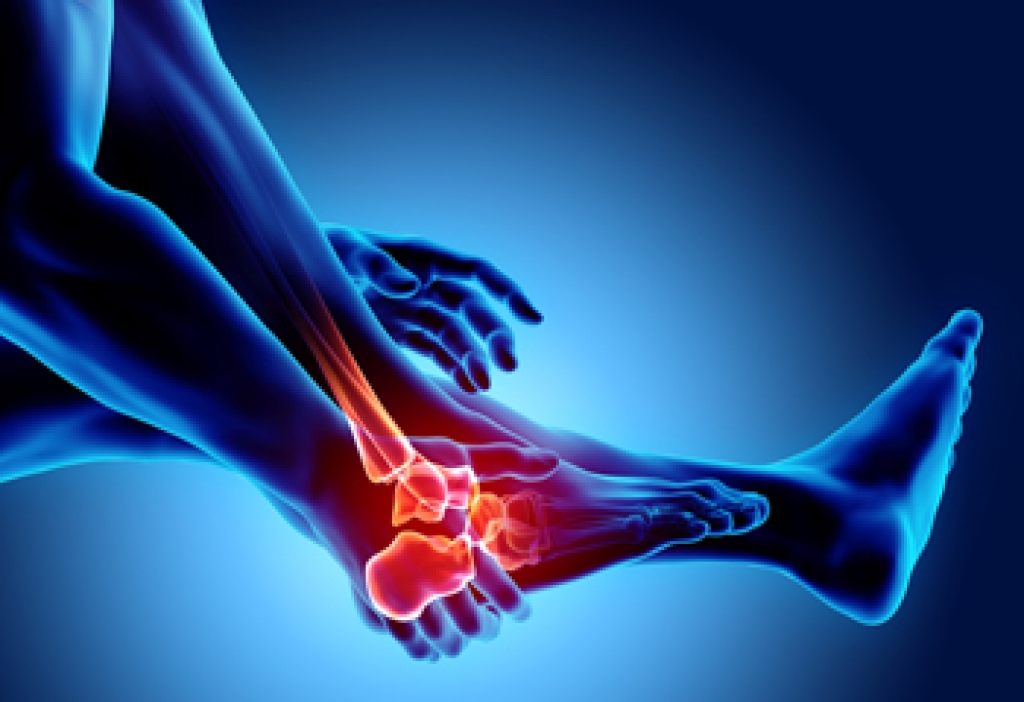
Arthritis can affect many parts of the body, including the joints of your feet. There are several types of arthritis that can affect the feet, the most common being osteoarthritis. The joints are covered with articular cartilage, connective tissue that covers the surface of bones in joints. This cartilage reduces friction with joint movement. Arthritis will cause the joints to wear down and lose this cartilage, resulting in the bones rubbing against each other. Soft tissues in joints might also become worn, and this can cause stiff joints that will not function properly. Early signs of foot arthritis include pain, swelling, and stiffness. This ailment can cause acute, or sudden, symptoms or chronic, or long-lasting, symptoms. When osteoarthritis affects the feet, it is usually the joint in the big toe that is first impacted. However, this kind of arthritis can also affect the midfoot. If you have pain in your feet for any reason, or think you might have arthritis, see a podiatrist who can properly evaluate your condition and offer treatment options to provide relief.

Arthritis can be a difficult condition to live with. If you are seeking treatment, contact Steven Black, DPM from California . Our doctor can provide the care you need to keep you pain-free and on your feet.

Arthritic Foot Care  

Arthritis is a joint disorder that involves the inflammation of different joints in your body, such as those in your feet. Arthritis is often caused by a degenerative joint disease and causes mild to severe pain in all affected areas. In addition to this, swelling and stiffness in the affected joints can also be a common symptom of arthritis.

In many cases, wearing ill-fitting shoes can worsen the effects and pain of arthritis. Wearing shoes that have a lower heel and extra room can help your feet feel more comfortable. In cases of rheumatoid arthritis, the arch in your foot may become problematic. Buying shoes with proper arch support that contour to your feet can help immensely.

Alleviating Arthritic Pain

  • Exercises that stretch the foot can prevent further pain and injury and increase mobility
  • Most of the pain can be alleviated with anti-inflammatory drugs, heat, and topical medications
  • Massages can help temporarily alleviate pain.

It is best to see your doctor for the treatment that is right for your needs and symptoms. Conditions vary, and a podiatrist can help you determine the right method of care for your feet.

If you have any questions please feel free to contact our office located in Lancaster, CA . We offer the newest diagnostic tools and technology to treat your foot and ankle needs.

Read more about Arthritic Foot Care

Styles of Running Can Determine What Type of Shoe Is Worn

Choosing running shoes that fit well can be a daunting task. It can help to decide what kind of running is desired and find shoes that are a match. There are various types of running surfaces, including trails, roads, and treadmills. In addition to that, it is beneficial for the running style to be considered which can be racing, casual, or long-distance. Shoes that are made for road running often have extra cushioning and must be able to handle running on a hard surface. Trail running requires shoes that have more traction than other shoes and this can make it easier to run on dirt, mud, or rocks. Many people choose to wear lighter shoes if treadmill running is their style. This lighter type of shoe may have less cushioning. To ensure a proper fit for any type of running the foot must be accurately measured. This is done by combining the width of the shoe, the heel fit, and the instep. If you would like additional information about how to choose the right running shoes, please consult with a podiatrist.

If you are a runner, wearing the right running shoe is essential. For more information, contact Steven Black, DPM from California . Our doctor can provide the care you need to keep you pain-free and on your feet.

Choosing the Right Running Shoe for Your Foot Type

To increase performance and avoid the risk of injury, it is important to choose the right running shoe based on your foot type. The general design of running shoes revolves around pronation, which is how the ankle rolls from outside to inside when the foot strikes the ground.

  • Neutral runners are able to choose from a wide variety of shoes, including minimalist shoes or even going barefoot.
  • Runners who overpronate, or experience an over-abundance of ankle rolling, should choose shoes that provide extra motion control and stability.
  • Runners who underpronate, or supinate, have feet that have high arches and lack flexibility, preventing shock absorption. They require shoes with more flexibility and cushion.

If you have any questions, please feel free to contact our office located in Lancaster, CA . We offer the newest diagnostic and treatment technologies for all your foot care needs.
Read more about Choosing the Right Running Shoe for Your Foot Type

Reasons Plantar Fasciitis Can Occur

Patients who have the foot condition known as plantar fasciitis generally cannot ignore the pain that accompanies it. This condition happens when the plantar fascia becomes inflamed, and the heel and calf are affected. The plantar fascia is the band of tissue that connects the heel to the toes and is found on the sole of the foot. Plantar fasciitis develops when the plantar fascia becomes inflamed, and this can happen for various reasons. Standing on hard surfaces for most of the day can contribute to getting plantar fasciitis, in addition to wearing shoes that do not fit correctly. Plantar fasciitis may hinder the ability to accomplish daily tasks and may worsen if prompt medical treatment is not received. Mild relief may be found when specific heel stretches are frequently performed. This is done by standing on a step while lowering one heel at a time until a gentle stretch is felt. If you are afflicted with plantar fasciitis, it is strongly advised that you are under the care of a podiatrist who can offer you the correct treatment options.

Plantar fasciitis is a common foot condition that is often caused by a strain injury. If you are experiencing heel pain or symptoms of plantar fasciitis, contact Steven Black, DPM from California . Our doctor can provide the care you need to keep you pain-free and on your feet.

What Is Plantar Fasciitis?

Plantar fasciitis is one of the most common causes of heel pain. The plantar fascia is a ligament that connects your heel to the front of your foot. When this ligament becomes inflamed, plantar fasciitis is the result. If you have plantar fasciitis you will have a stabbing pain that usually occurs with your first steps in the morning. As the day progresses and you walk around more, this pain will start to disappear, but it will return after long periods of standing or sitting.

What Causes Plantar Fasciitis?

  • Excessive running
  • Having high arches in your feet
  • Other foot issues such as flat feet
  • Pregnancy (due to the sudden weight gain)
  • Being on your feet very often

There are some risk factors that may make you more likely to develop plantar fasciitis compared to others. The condition most commonly affects adults between the ages of 40 and 60. It also tends to affect people who are obese because the extra pounds result in extra stress being placed on the plantar fascia.

Prevention

  • Take good care of your feet – Wear shoes that have good arch support and heel cushioning.
  • Maintain a healthy weight
  • If you are a runner, alternate running with other sports that won’t cause heel pain

There are a variety of treatment options available for plantar fasciitis along with the pain that accompanies it. Additionally, physical therapy is a very important component in the treatment process. It is important that you meet with your podiatrist to determine which treatment option is best for you.

If you have any questions, please feel free to contact our office located in Lancaster, CA . We offer the newest diagnostic and treatment technologies for all your foot care needs.

 

Read more about Plantar Fasciitis

Let Us Treat Your Feet This Winter

Take extra care when walking on snow and ice. If you experience a fall and sustain an injury, we're here to help. We treat trauma, soft tissue injuries, and fractures.

Simple Everyday Foot Care Techniques

Many people are experts in taking care of different parts of their body, but may lack the enthusiasm to properly care for their feet. This may lead to getting unwanted foot conditions, such as fungal infections, cracked skin, or corns. The feet may need to have additional pampering in the colder months, when they can become dry from the weather. There are basic methods that can be implemented, which can make the feet feel better. These can include washing them daily, followed by applying a good moisturizer. It can be helpful to exfoliate the skin on the feet on a monthly basis by using a loofah or pumice stone, in addition to soaking the feet in warm water every other week. One of the most important things that can be done for the feet is to wear shoes that are comfortable and fit well. It is suggested to limit the time wearing high heels, and this may help to prevent hammertoe and bunions from developing. If you would like more information about how to care for your feet daily, please ask a podiatrist who can provide you with helpful tips.

Everyday foot care is very important to prevent infection and other foot ailments. If you need your feet checked, contact Steven Black, DPM from California . Our doctor can provide the care you need to keep you pain-free and on your feet.

Everyday Foot Care

Often, people take care of their bodies, face and hair more so than they do for their feet. But the feet are a very important aspect of our bodies, and one that we should pay more attention to. Without our feet, we would not be able to perform most daily tasks.

It is best to check your feet regularly to make sure there are no new bruises or cuts that you may not have noticed before. For dry feet, moisturizer can easily be a remedy and can be applied as often as necessary to the affected areas. Wearing shoes that fit well can also help you maintain good foot health, as well as making it easier to walk and do daily activities without the stress or pain of ill-fitting shoes, high heels, or even flip flops. Wearing clean socks with closed shoes is important to ensure that sweat and bacteria do not accumulate within the shoe. Clean socks help to prevent Athlete’s foot, fungi problems, bad odors, and can absorb sweat.

If you have any questions, please feel free to contact our office located in Lancaster, CA . We offer the newest diagnostic and treatment technologies for all your foot care needs.

Read more about Every Day Foot Care

Foot Problems in Newborns

Foot deformities are among the most common deformities in newborns. Most of the foot problems newborns face are treated non-surgically. Such newborn deformities include clubfoot, which describes an array of foot deformities that lead a newborn’s feet to be twisted, pointed down, and inward. Approximately half of the babies with clubfoot have it on both feet and boys are more apt to have clubfoot than girls. This affliction does not cause a baby pain, but it can lead to long-term difficulties with walking. If treated with stretching exercises, casts, or surgery, a clubfoot deformity can be corrected in early childhood. If you are pregnant and expect your baby to be born with clubfoot, or you have such a newborn, it is suggested that you see a podiatrist as soon as possible for treatment to prevent any long-term impact from this condition.

Congenital foot problems require immediate attention to avoid future complications. If you have any concerns, contact Steven Black, DPM of California . Our doctor can provide the care you need to keep you pain-free and on your feet.

Congenital foot problems are deformities affecting the feet, toes, and/or ankles that children are born with. Some of these conditions have a genetic cause while others just happen. Some specific foot ailments that children may be born with include clubfeet, polydactyly/macrodactyly, and cleft foot. There are several other foot anomalies that can occur congenitally. What all of these conditions have in common is that a child may experience difficulty walking or performing everyday activities, as well as trouble finding footwear that fits their foot deformity. Some of these conditions are more serious than others. Consulting with a podiatrist as early as possible will help in properly diagnosing a child’s foot condition while getting the necessary treatment underway.

What are Causes of Congenital Foot Problem?

A congenital foot problem is one that happens to a child at birth. These conditions can be caused by a genetic predisposition, developmental or positional abnormalities during gestation, or with no known cause.

What are Symptoms of Congenital Foot Problems?

Symptoms vary by the congenital condition. Symptoms may consist of the following:

  • Clubfoot, where tendons are shortened, bones are shaped differently, and the Achilles tendon is tight, causing the foot to point in and down. It is also possible for the soles of the feet to face each other.
  • Polydactyly, which usually consists of a nubbin or small lump of tissue without a bone, a toe that is partially formed but has no joints, or an extra toe.
  • Vertical talus, where the talus bone forms in the wrong position causing other bones in the foot to line up improperly, the front of the foot to point up, and the bottom of the foot to stiffen, with no arch, and to curve out.
  • Tarsal coalition, when there is an abnormal connection of two or more bones in the foot leading to severe, rigid flatfoot.
  • Cleft foot, where there are missing toes, a V-shaped cleft, and other anatomical differences.
  • Macrodactyly, when the toes are abnormally large due to overgrowth of the underlying bone or soft tissue.

Treatment and Prevention

While there is nothing one can do to prevent congenital foot problems, raising awareness and receiving neonatal screenings are important. Early detection by taking your child to a podiatrist leads to the best outcome possible.

If you have any questions, please feel free to contact our office located in Lancaster, CA . We offer the newest diagnostic and treatment technologies for all your foot care needs.
Read more about Congenital Foot Problems

Pros and Cons of Achilles Tendon Stretches

When athletes, and especially runners, stretch tight calf muscles, they may be doing more harm than good to the Achilles tendon, experts say. Short active stretches may be more beneficial than passive stretching, where the heel is pressed downward and held for an extended period of time. Research has shown an overload on the Achilles tendon can cause it to become inflamed. When a typical calf/Achilles tendon stretch is performed, it’s normal for the tendon to press against the heel bone. However, when this position is gained too forcefully or sustained for too long it can become a problem. In fact, it is believed that overdoing a heel drop stretch of the Achilles tendon and calf can actually contribute to Achilles tendonitis. For this reason, experts recommend a heel drop flat against the floor rather than from a stair step, where the heel goes below the horizontal plane. Instead, massage, foam rolling, and double heel raises can help do the job of relieving tightness. For more detailed guidance on how to avoid Achilles tendonitis, please consult a podiatrist.

Achilles tendon injuries need immediate attention to avoid future complications. If you have any concerns, contact Steven Black, DPM of California . Our doctor can provide the care you need to keep you pain-free and on your feet.

What Is the Achilles Tendon?

The Achilles tendon is a tendon that connects the lower leg muscles and calf to the heel of the foot. It is the strongest tendon in the human body and is essential for making movement possible. Because this tendon is such an integral part of the body, any injuries to it can create immense difficulties and should immediately be presented to a doctor.

What Are the Symptoms of an Achilles Tendon Injury?

There are various types of injuries that can affect the Achilles tendon. The two most common injuries are Achilles tendinitis and ruptures of the tendon.

Achilles Tendinitis Symptoms

  • Inflammation
  • Dull to severe pain
  • Increased blood flow to the tendon
  • Thickening of the tendon

Rupture Symptoms

  • Extreme pain and swelling in the foot
  • Total immobility

Treatment and Prevention

Achilles tendon injuries are diagnosed by a thorough physical evaluation, which can include an MRI. Treatment involves rest, physical therapy, and in some cases, surgery. However, various preventative measures can be taken to avoid these injuries, such as:

  • Thorough stretching of the tendon before and after exercise
  • Strengthening exercises like calf raises, squats, leg curls, leg extensions, leg raises, lunges, and leg presses

If you have any questions please feel free to contact our office located in Lancaster, CA . We offer the newest diagnostic tools and technology to treat your foot and ankle needs.

Read more about Achilles Tendon Injuries

All About Morton’s Neuroma

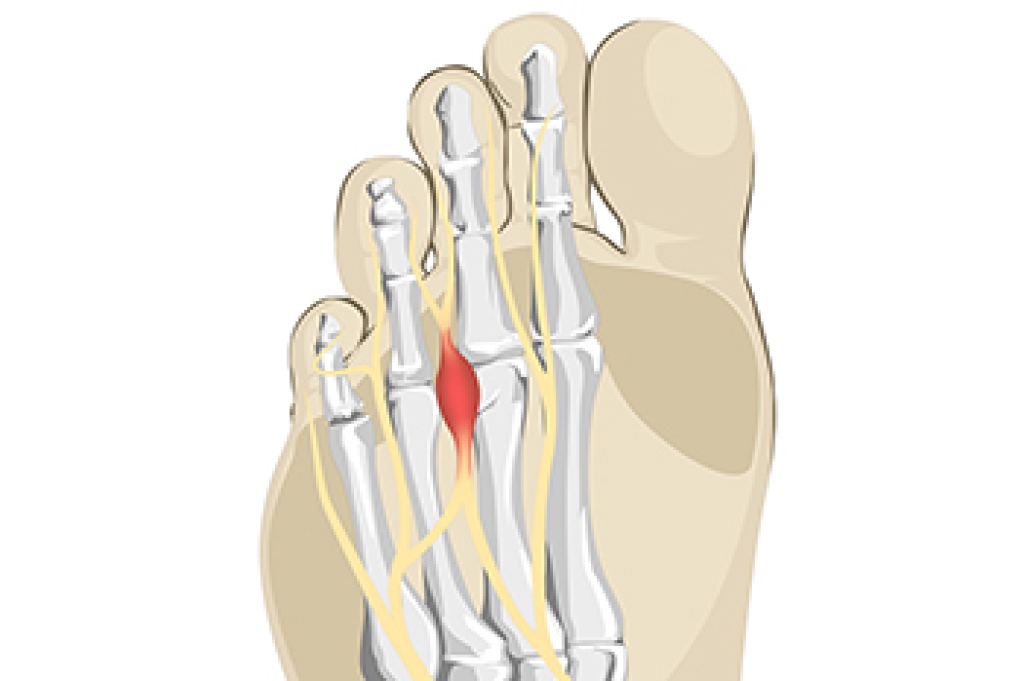
Morton’s neuroma is named for a doctor who discovered this condition in 1876. It affects the nerve that runs between the long bones of the foot, commonly the 3rd and 4th metatarsals. The main symptoms of Morton’s neuroma are pain and numbness in the toes above the affected metatarsals. It can produce the same symptoms in the nerve between the 2nd and 3rd metatarsals. Morton’s neuroma usually affects only one foot and rarely affects two nerves of the same foot. The exact cause of Morton’s neuroma is not clear, but it is thought to be the result of a thickening of the nerve. This effect may be produced by chronic compression of the nerves. About three-quarters of people with Morton’s neuroma are women between the ages of 40 and 50. It is believed that tight or poorly fitting shoes greatly contribute to the formation of Morton’s neuroma, and it is common among runners and ballet dancers. Symptoms include pain that starts in the ball of the foot and shoots into the nearby toes. There also may be burning and tingling, along with a feeling of having a small pebble in the shoe. For a diagnosis and treatment options for Morton’s neuroma, it is suggested that you visit a podiatrist. 

Morton’s neuroma is a very uncomfortable condition to live with. If you think you have Morton’s neuroma, contact Steven Black, DPM of California . Our doctor will attend to all of your foot care needs and answer any of your related questions.  

Morton’s Neuroma

Morton's neuroma is a painful foot condition that commonly affects the areas between the second and third or third and fourth toe, although other areas of the foot are also susceptible. Morton’s neuroma is caused by an inflamed nerve in the foot that is being squeezed and aggravated by surrounding bones.

What Increases the Chances of Having Morton’s Neuroma?

  • Ill-fitting high heels or shoes that add pressure to the toe or foot
  • Jogging, running or any sport that involves constant impact to the foot
  • Flat feet, bunions, and any other foot deformities

Morton’s neuroma is a very treatable condition. Orthotics and shoe inserts can often be used to alleviate the pain on the forefront of the feet. In more severe cases, corticosteroids can also be prescribed. In order to figure out the best treatment for your neuroma, it’s recommended to seek the care of a podiatrist who can diagnose your condition and provide different treatment options.

If you have any questions, please feel free to contact our office located in Lancaster, CA . We offer the newest diagnostic and treatment technologies for all your foot care needs.

Read more about What is Morton's Neuroma?

Get Professional Care for a Broken Foot or Ankle

Constant care and regular evaluation are important for a foot or ankle fracture. If left untreated, foot or ankle fractures can worsen over time and create more serious problems.

Don't wait to be examined if you believe you've experienced a foot or ankle fracture.

Connect With Us