
Common Achilles Tendon Disorders

The Achilles tendon is a band of tissue that runs down the back of your leg and connects the calf muscle to the heel. Its main job is to lift the heel so you can walk, run, and jump. When the Achilles tendon is overused, it can result in either tendonitis or tendinosis. Achilles tendonitis is especially common among athletes, laborers who spend a lot of time on their feet, and people who exercise infrequently. Symptoms may consist of pain, tenderness, stiffness, or soreness at the back of the heel. Tendonitis is an inflammation usually caused by a sudden increase in repetitive activity and normally is short-lived once you cease the activity. If ignored or neglected, however, it can become Achilles tendonosis, a far more serious condition. This may result in minor tears that degenerate the tendon and can eventually cause it to rupture. If you believe you have injured your Achilles tendon, please consult with a podiatrist who can properly diagnose the severity of your condition and offer the appropriate treatment options.

Achilles tendon injuries need immediate attention to avoid future complications. If you have any concerns, contact Steven Black, DPM of California . Our doctor can provide the care you need to keep you pain-free and on your feet.

What Is the Achilles Tendon?

The Achilles tendon is a tendon that connects the lower leg muscles and calf to the heel of the foot. It is the strongest tendon in the human body and is essential for making movement possible. Because this tendon is such an integral part of the body, any injuries to it can create immense difficulties and should immediately be presented to a doctor.

What Are the Symptoms of an Achilles Tendon Injury?

There are various types of injuries that can affect the Achilles tendon. The two most common injuries are Achilles tendinitis and ruptures of the tendon.

Achilles Tendinitis Symptoms

  • Inflammation
  • Dull to severe pain
  • Increased blood flow to the tendon
  • Thickening of the tendon

Rupture Symptoms

  • Extreme pain and swelling in the foot
  • Total immobility

Treatment and Prevention

Achilles tendon injuries are diagnosed by a thorough physical evaluation, which can include an MRI. Treatment involves rest, physical therapy, and in some cases, surgery. However, various preventative measures can be taken to avoid these injuries, such as:

  • Thorough stretching of the tendon before and after exercise
  • Strengthening exercises like calf raises, squats, leg curls, leg extensions, leg raises, lunges, and leg presses

If you have any questions please feel free to contact our office located in Lancaster, CA . We offer the newest diagnostic tools and technology to treat your foot and ankle needs.

Read more about What are Achilles Tendon Injuries

Different Forms of Heel Pain

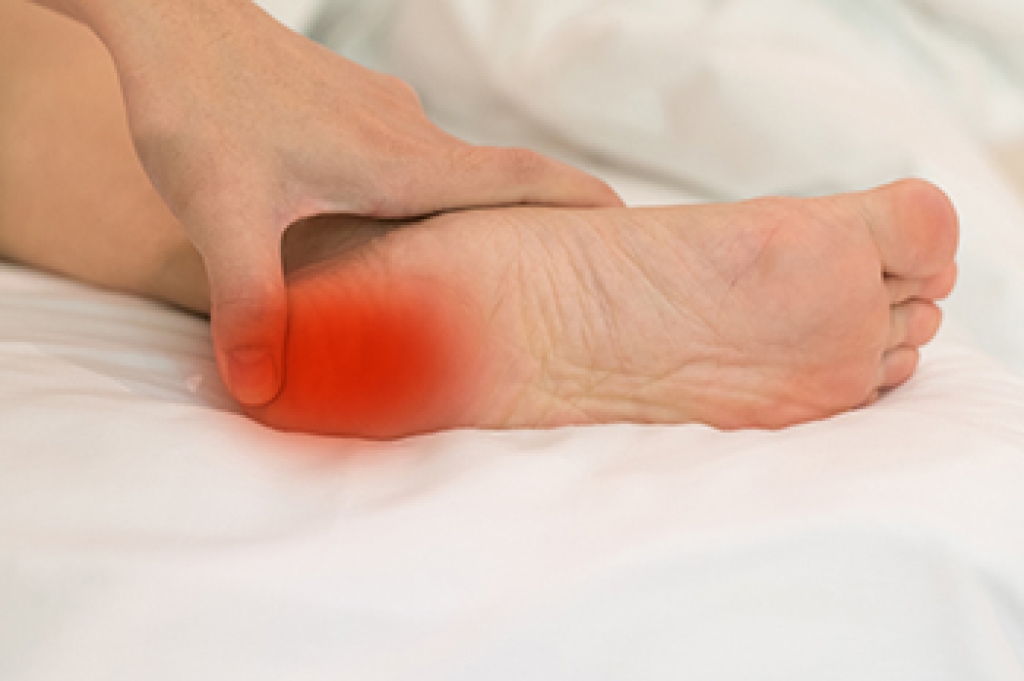
Heel pain can be caused by a variety of factors, including biomechanical issues, injuries, arthritis, and more. By far, the most common form of heel pain is plantar fasciitis, a painful inflammation of the plantar fascia tissue on the bottom of the foot that connects the heel bone with the toes. Heel spurs, which often occur concurrently with plantar fasciitis, are actually bone growths that build up on the heel bone where the plantar fascia attaches to it as a result of long-term stress. Sever’s disease occurs in growing children. It is an inflammation in the growth plate of their heel that occurs from repetitive stress to the area from physical activity or overuse. Haglund’s deformity, also known as a pump bump, occurs when the bony section at the back of the heel rubs against shoes and causes the soft tissue to become irritated and form a bump where the heel attaches to the Achilles tendon. Nerve compression can also cause heel pain, numbness, and tingling. It is sometimes associated with an ankle sprain and is known as heel neuritis. There is a fluid-filled bursa sac at the back of the heel which can become irritated and swollen from improperly fitted footwear. This condition is known as bursitis. A podiatrist can diagnose your particular heel pain after reviewing your medical history, examining you, and running diagnostic tests. Call a podiatrist today to begin to get relief from your heel pain today.

Many people suffer from bouts of heel pain. For more information, contact Steven Black, DPM of California . Our doctor can provide the care you need to keep you pain-free and on your feet.

Causes of Heel Pain

Heel pain is often associated with plantar fasciitis. The plantar fascia is a band of tissues that extends along the bottom of the foot. A rip or tear in this ligament can cause inflammation of the tissue.

Achilles tendonitis is another cause of heel pain. Inflammation of the Achilles tendon will cause pain from fractures and muscle tearing. Lack of flexibility is also another symptom.

Heel spurs are another cause of pain. When the tissues of the plantar fascia undergo a great deal of stress, it can lead to ligament separation from the heel bone, causing heel spurs.

Why Might Heel Pain Occur?

  • Wearing ill-fitting shoes                
  • Wearing non-supportive shoes
  • Weight change           
  • Excessive running

Treatments

Heel pain should be treated as soon as possible for immediate results. Keeping your feet in a stress-free environment will help. If you suffer from Achilles tendonitis or plantar fasciitis, applying ice will reduce the swelling. Stretching before an exercise like running will help the muscles. Using all these tips will help make heel pain a condition of the past.

If you have any questions, please feel free to contact our office located in Lancaster, CA . We offer the newest diagnostic and treatment technologies for all your foot care needs.

Read more about Heel Pain

Facts About Foot and Ankle Fractures

A fracture, which is a break or crack in a bone, can vary greatly in type and level of severity. Symptoms of fractures include redness, swelling, pain, and difficulty/inability to bear weight. If you believe you have sustained a foot or ankle fracture, please seek medical help immediately. Among the types of fractures are displaced bone, stress fracture, pathological fracture, or compound or open fracture. A displaced bone fracture occurs when the broken ends of a bone move away from each other. Conversely, with a stress fracture the bone cracks but stays intact. A pathological fracture may be the result of a disease or condition that weakens the bone. Among the causes are cancer and osteoporosis. A fracture can occur simply as a result of ordinary daily activities, absent any extreme force or trauma. A compound fracture creates an open wound when the bone is pushed through the skin as the result of trauma. These are extremely serious fractures and it is suggested you get immediate attention as soon as possible. A podiatrist can examine, diagnose and treat it properly. 

Foot and ankle trauma is common among athletes and the elderly. If you have concerns that you may have experienced trauma to the foot and ankle, consult with Steven Black, DPM from California . Our doctor will assess your condition and provide you with quality foot and ankle treatment.

Foot and ankle trauma cover a range of injuries all over the foot; common injuries include:

  • Broken bones
  • Muscle strains
  • Injuries to the tendons and ligaments
  • Stress fractures

Symptoms

Symptoms of foot and ankle injuries vary depending on the injury, but more common ones include:

  • Bruising
  • Inflammation/ Swelling
  • Pain

Diagnosis

To properly diagnose the exact type of injury, podiatrists will conduct a number of different tests. Some of these include sensation and visual tests, X-rays, and MRIs. Medical and family histories will also be taken into account.

Treatment

Once the injury has been diagnosed, the podiatrist can than offer the best treatment options for you. In less severe cases, rest and keeping pressure off the foot may be all that’s necessary. Orthotics, such as a specially made shoes, or immobilization devices, like splints or casts, may be deemed necessary. Finally, if the injury is severe enough, surgery may be necessary.

If you have any questions, please feel free to contact our office located in Lancaster, CA . We offer the newest diagnostic and treatment technologies for all your foot care needs.

Read more about Foot and Ankle Trauma

Excessive Foot Sweat

Focal hyperhidrosis is when the palms of the hands or soles of the feet sweat excessively. This condition can be inherited, be due to an underlying health problem (such as menopause, obesity, or diabetes), be a side effect of medications, or have no known cause. Though not serious itself, hyperhidrosis can lead to other uncomfortable skin problems or infections and can cause anxiety and embarrassment. This condition usually starts in adolescence. Clammy or wet soles of the feet can be reduced by wearing footwear made of natural materials, like leather, wearing moisture absorbing socks, and using foot antiperspirants.  People who suffer from hyperhidrosis may be afraid to seek help or may not know that several other treatment options exist. Consulting with a podiatrist will help you identify if there is a possible underlying cause for this problem, and to assist you with obtaining a more effective treatment plan.

If you are suffering from hyperhidrosis contact Steven Black, DPM of California . Our doctor can provide the care you need to attend to all of your foot and ankle needs.

Hyperhidrosis of the Feet

Hyperhidrosis is a rare disorder that can cause people to have excessive sweating of their feet. This can usually occur all on its own without rigorous activity involved. People who suffer from hyperhidrosis may also experience sweaty palms.

Although it is said that sweating is a healthy process meant to cool down the body temperature and to maintain a proper internal temperature, hyperhidrosis may prove to be a huge hindrance on a person’s everyday life.

Plantar hyperhidrosis is considered to be the main form of hyperhidrosis. Secondary hyperhidrosis can refer to sweating that occurs in areas other than the feet or hands and armpits. Often this may be a sign of it being related to another medical condition such as menopause, hyperthyroidism and even Parkinson’s disease.

In order to alleviate this condition, it is important to see your doctor so that they may prescribe the necessary medications so that you can begin to live a normal life again. If this is left untreated, it is said that it will persist throughout an individual’s life.

A last resort approach would be surgery, but it is best to speak with your doctor to find out what may be the best treatment for you.

If you have any questions, please feel free to contact our office located in Lancaster, CA . We offer the newest diagnostic and treatment technologies for all your foot care needs.

Read more about Hyperhidrosis of the Feet

Connect With Us