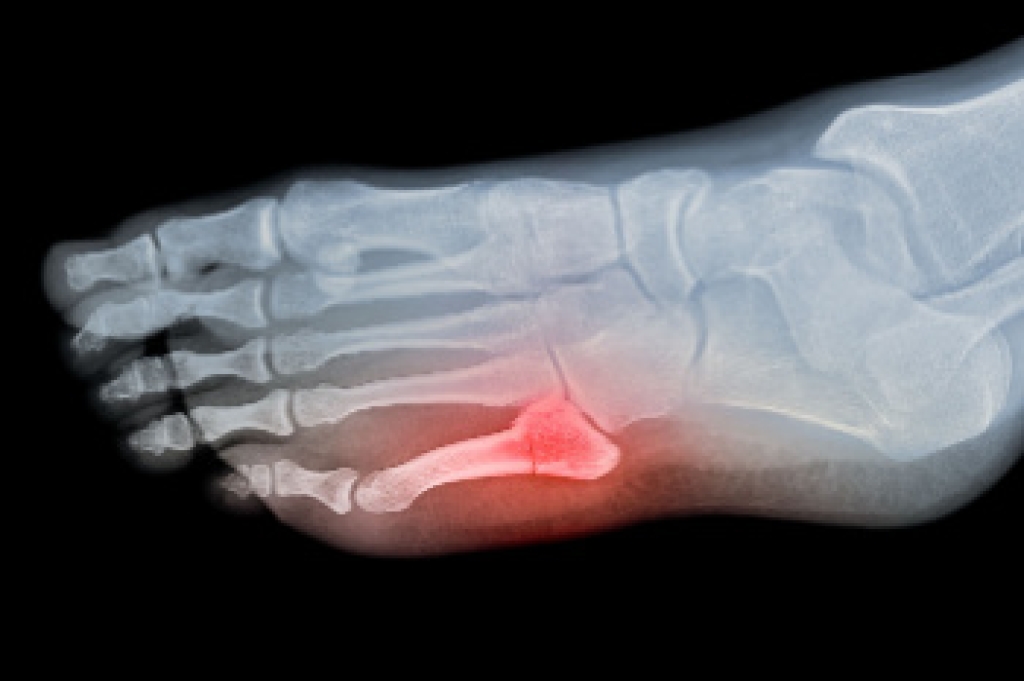
Identifying a Toe Fracture

A toe fracture is a break in one of the small bones of the toe, often caused by trauma such as stubbing the toe, dropping something heavy on it, or sports injuries. Symptoms include pain, swelling, bruising, and difficulty walking. The affected toe may appear crooked or misaligned. Diagnosis typically involves a physical examination and imaging tests like X-rays to confirm the extent and location of the break. A podiatrist can assess the injury and recommend appropriate care, which may include splinting, protective footwear, or, in some cases, surgery. If you suspect a broken toe, it is suggested that you visit a podiatrist promptly to ensure proper healing and to avoid long-term complications.

A broken toe can be very painful and lead to complications if not properly fixed. If you have any concerns about your feet, contact Steven Black, DPM from California . Our doctor will treat your foot and ankle needs.

What to Know About a Broken Toe

Although most people try to avoid foot trauma such as banging, stubbing, or dropping heavy objects on their feet, the unfortunate fact is that it is a common occurrence. Given the fact that toes are positioned in front of the feet, they typically sustain the brunt of such trauma. When trauma occurs to a toe, the result can be a painful break (fracture).

Symptoms of a Broken Toe

  • Throbbing pain
  • Swelling
  • Bruising on the skin and toenail
  • The inability to move the toe
  • Toe appears crooked or disfigured
  • Tingling or numbness in the toe

Generally, it is best to stay off of the injured toe with the affected foot elevated.

Severe toe fractures may be treated with a splint, cast, and in some cases, minor surgery. Due to its position and the pressure it endures with daily activity, future complications can occur if the big toe is not properly treated.

If you have any questions, please feel free to contact our office located in Lancaster, CA . We offer the newest diagnostic and treatment technologies for all your foot care needs.


Read more about What to Know About a Broken Toe

Spotting a Foot Stress Fracture

A foot stress fracture is a small crack in the bone caused by repetitive stress rather than a single traumatic event. It often develops over time and is common among athletes and individuals who suddenly increase their activity level. Risk factors include wearing poor footwear, weakened bones, and high-impact sports. Causes may involve overuse, improper training, or biomechanical issues. Symptoms include localized pain, swelling, tenderness, and discomfort during activity. A podiatrist can confirm the diagnosis through imaging tests, recommend rest, footwear changes, and possibly immobilization to ensure proper healing. If you have persistent foot pain that worsens with activity, it is suggested that you promptly schedule a visit with a podiatrist to receive expert care and prevent complications.

Activities where too much pressure is put on the feet can cause stress fractures. To learn more, contact Steven Black, DPM from California . Our doctor can provide the care you need to keep your pain free and on your feet.

Dealing with Stress Fractures of the Foot and Ankle

Stress fractures occur in the foot and ankle when muscles in these areas weaken from too much or too little use.  The feet and ankles then lose support when walking or running from the impact of the ground. Since there is no protection, the bones receive the full impact of each step. Stress on the feet can cause cracks to form in the bones, thus creating stress fractures.

What Are Stress Fractures?

Stress fractures occur frequently in individuals whose daily activities cause great impact on the feet and ankles. Stress factors are most common among:

  • Runners                                
  • People affected with Osteoporosis
  • Tennis or basketball players
  • Gymnasts
  • High impact workouts

Symptoms

Pain from the fractures occur in the area of the fractures and can be constant or intermittent. It will often cause sharp or dull pain with swelling and tenderness. Engaging in any kind of activity which involves high impact will aggravate pain.

If you have any questions please contact our office located in Lancaster, CA . We offer the newest diagnostic and treatment technologies for all your foot and ankle needs.

Read more about Stress Fractures of the Foot and Ankle

Managing Diabetic Foot Ulcers

Diabetic foot ulcers are open sores or wounds that commonly occur on the bottom of the foot in people with diabetes. They are caused by poor circulation, nerve damage or neuropathy, high blood sugar levels, and repetitive pressure or trauma to the feet. Because nerve damage can dull pain sensations, many patients may not feel the ulcer forming until it becomes severe. Symptoms include redness, swelling, drainage, or a foul odor. The area may feel warm, and in some cases, there can be pain, although many feel little to none due to neuropathy. Untreated ulcers can lead to serious infections or even loss of limb. A podiatrist plays a key role in managing diabetic foot ulcers by offering treatments like offloading that reduce the pressure on the wound, wound debridement to remove dead tissue, specialized dressings, and infection control. Custom orthotics or diabetic shoes may also be recommended. If you have diabetes and have a foot ulcer, it is suggested that you are under the care of  a podiatrist.

Wound care is an important part in dealing with diabetes. If you have diabetes and a foot wound or would like more information about wound care for diabetics, consult with Steven Black, DPM from California . Our doctor will assess your condition and provide you with quality foot and ankle treatment.

What Is Wound Care?

Wound care is the practice of taking proper care of a wound. This can range from the smallest to the largest of wounds. While everyone can benefit from proper wound care, it is much more important for diabetics. Diabetics often suffer from poor blood circulation which causes wounds to heal much slower than they would in a non-diabetic. 

What Is the Importance of Wound Care?

While it may not seem apparent with small ulcers on the foot, for diabetics, any size ulcer can become infected. Diabetics often also suffer from neuropathy, or nerve loss. This means they might not even feel when they have an ulcer on their foot. If the wound becomes severely infected, amputation may be necessary. Therefore, it is of the upmost importance to properly care for any and all foot wounds.

How to Care for Wounds

The best way to care for foot wounds is to prevent them. For diabetics, this means daily inspections of the feet for any signs of abnormalities or ulcers. It is also recommended to see a podiatrist several times a year for a foot inspection. If you do have an ulcer, run the wound under water to clear dirt from the wound; then apply antibiotic ointment to the wound and cover with a bandage. Bandages should be changed daily and keeping pressure off the wound is smart. It is advised to see a podiatrist, who can keep an eye on it.

If you have any questions please contact our office located in Lancaster, CA . We offer the newest diagnostic and treatment technologies for all your foot and ankle needs.

Read more about Wound Care

Let the Expert Treat Your Ingrown Toenails

Ingrown toenails can be painful and can make wearing shoes or walking uncomfortable. Seek professional help if you believe you've developed an ingrown toenail and be treated safely. 

Painful Ingrown Toenails

Ingrown toenails occur when the edge of the toenail grows into the surrounding skin, often affecting the big toe. This common condition can be caused by trimming toenails too short, wearing tight shoes, injury, or a natural curve in the nail. Symptoms include redness, swelling, pain along the nail edge, and sometimes drainage or infection, if left untreated. The area may feel tender to the touch and become increasingly painful when walking or wearing shoes. A podiatrist can diagnose an ingrown toenail with a simple exam. Treatment may involve gently lifting the nail edge, removing a portion of the nail, or prescribing antibiotics if an infection is present. In recurring cases, a minor procedure can permanently remove part of the nail to prevent future problems. Proper nail care and footwear recommendations can also help prevent recurrence. If you have developed an ingrown toenail, it is suggested that you promptly schedule an appointment with a podiatrist who can effectively treat this condition.

Ingrown toenails may initially present themselves as a minor discomfort, but they may progress into an infection in the skin without proper treatment. For more information about ingrown toenails, contact Steven Black, DPM of California . Our doctor can provide the care you need to keep you pain-free and on your feet.

Ingrown Toenails

Ingrown toenails are caused when the corner or side of a toenail grows into the soft flesh surrounding it. They often result in redness, swelling, pain, and in some cases, infection. This condition typically affects the big toe and may recur if it is not treated properly.

Causes

  • Improper toenail trimming
  • Genetics
  • Improper shoe fitting
  • Injury from pedicures or nail picking
  • Abnormal gait
  • Poor hygiene

You are more likely to develop an ingrown toenail if you are obese, have diabetes, arthritis, or have any fungal infection in your nails. Additionally, people who have foot or toe deformities are at a higher risk of developing an ingrown toenail.

Symptoms

Some symptoms of ingrown toenails are redness, swelling, and pain. In rare cases, there may be a yellowish drainage coming from the nail.

Treatment

Ignoring an ingrown toenail can have serious complications. Infections of the nail border can progress to a deeper soft-tissue infection, which can then turn into a bone infection. You should always speak with your podiatrist if you suspect you have an ingrown toenail, especially if you have diabetes or poor circulation.

If you have any questions, please feel free to contact our office located in Lancaster, CA . We offer the newest diagnostic and treatment technologies for all your foot care needs.

Read more about Ingrown Toenail Care

Connect With Us